Landmines Hiv/aids Trust
Registered Charity Number: 1149204
HIV Risk in Demining
HIV/AIDS RISK ASSESSMENT IN THE PROJECT AREA
THE PROJECT AREA’S DEMINING INDUSTRY AND HIV/AIDS
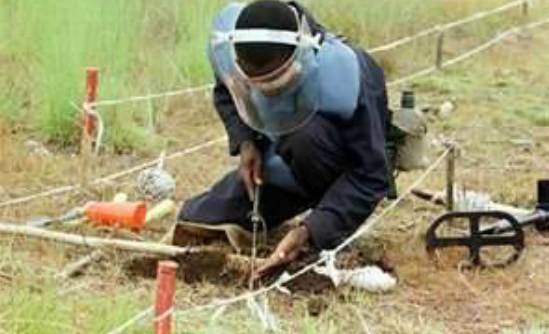
“In August 2011, the Angolan organization ONDAH conducted an HIV/AIDS Knowledge, Attitudes, Behaviours and Perceptions Survey among 45 landmine clearance workers in Cassinga, Southern Angola. The significant summary findings in this study were that 97% respondents confirmed having had a sexual relationship outside marriage while on demining contracts and 66 % admitted to have had sexually transmitted infections while on landmine clearance contracts. The research results point to a high HIV transmission risk among the interviewed deminers due to sexual behaviours” www.landmineshivaids.ws
THE PROJECT AREA’S MINING INDUSTRY, INTERNATIONAL LABOR AND HIV/AIDS
With the expansion of AEMR and Novecia mining projects, there are a significant and increasing number of migrant mineworkers in the Jakutcha Triangle area. On HIV/AIDS and mining in Angola, the International Organization for Migration says, “Factors that increase HIV vulnerability of mine workers in general include- Accommodation and limited home-leave: Mine workers often have no choice but to live in single-sex hostels without the option of being accompanied by their partners and families. In addition, they may have limited home-leave which further distances them from their partners. Boredom and loneliness:. Workers are often distanced from traditional norms and support systems that regulate behaviour in stable communities, and coupled with feelings of boredom, loneliness, and isolation, this can result in a disregard for health. In addition, the proximity and availability of commercial sex may fill the workers’ (temporary) emotional and sexual needs. Lack of social cohesion: The social exclusion that migrants often feel in their new environment and the lack of community cohesiveness may lead to risky sexual behaviour among workers and members of the surrounding communities” http://www.iom.int/jahia/webdav/site/myjahiasite/Briefing_Notes_HIV_Angola.pdf
USAID ON ANGOLAN COMMUNITIES EMERGING FROM WAR AND HIV TRANSMISSION “Angola’s 27-year civil war (1975-2002), deterred the spread of HIV by making large portions of the country
inaccessible. Angola was thus cut off from most contact with neighboring countries that had higher HIV infection rates. With the end of the war, however, transportation routes and communication are reopening, therefore enabling a greater potential for the spread of HIV/AIDS. Indeed, current statistics indicate that the border provinces, especially certain areas bordering Namibia and the Democratic Republic of the Congo, currently have higher prevalence than the rest of the country. A 2003 USAID knowledge, attitudes, and practices (KAP) survey conducted among people aged 14 to 24 showed 43% of young people had had sex by the age of 15, one of the highest rates in the world. www.aids-laenderberichte.de/wp/wp-content/01/angola
MILITARY ESTABLISHMENTS IN THE PROJECT AREA AND HIV/AIDS
There are military establishments in the JAKUTCHA Triangle area. The National Institutes of Health published the following abstract regarding HIV/AIDS and the Angola military; “To assess HIV-related risk behavior among military men in a post-conflict sub-Saharan African country with low HIV prevalence this study evaluated sexual risk taking and related behaviors among a stratified random sample of 1710 military personnel in four regions of Angola. Over 90% were sexually active and 60% had two or more sexual partners within the past year. Condom use varied depending on partner type, from a low of 10% to a high of 54%. These findings indicate high rates of HIV-risk taking behaviors among military personnel and the need for aggressive prevention campaigns to reduce HIV risk among military personnel and the populations they serve” http://www.ncbi.nlm.nih.gov/pmc/articles/PMC2822546/

While you explore the various charitable opportunities on Charity Choice, take a moment to relax and discover something exciting. Visit Vavada Casino for a thrilling break that adds a bit of excitement to your day.